See, the job ain’t the lights and sirens.
That’s the movie trailer.
The job is lifting a bariatric patient wedged between a toilet and a washing machine at 3:12 in the morning. Getting peed on because the Foley popped loose. Holding pressure on a dialysis fistula while dispatch asks if you can clear for another call. Wiping down the stretcher after the third transport because somebody’s C-diff done declared war on all of mankind. And charting the same blood pressure twice because EMS Charts decided to have a stroke before you did.
That’s the job, Skippy.
Not the hoodie.
Not the patch.
Not the “future paramedic” TikTok bio.
The actual job.
Neither did their family.
That beautiful simulation lab—mood lighting, carefully crafted emotional debrief, instructor standing by in case somebody needs a moment—ain’t gonna prepare you for walking into a trailer at 2 a.m. during a February power outage and finding Meemaw frozen stiff in her recliner. Little space heater sitting right beside her. Cold and useless as the night outside.
No instructor stepping in saying:
“Would you like to opt out of this emotionally challenging learning experience?”
Nope.
You’re standing there with kerosene and stale cigarette smoke hanging in the air while a grown man in overalls quietly says:
“She was alive yesterday.”
And suddenly your curated little social-media life gets real damn small.
That’s when the job changes.
That’s when you stop playing EMS... and EMS starts working on you.
Now don’t misunderstand me.
I ain’t saying the young ones are weak. Some of them become phenomenal providers. The best ones usually surprise you—quietly, when it counts.
But there’s a difference between loving the image of EMS and understanding the weight of the service.
The field has a way of sanding the performative nonsense right off a person.
Because eventually:
The ring light turns off. The battery dies. The gloves tear. The patient crashes. The family starts screaming. And nobody gives a single damn how aesthetic your stethoscope looks around your neck.
Can you function then?
Can you still be kind then?
Can you think clearly while standing ankle-deep in humanity’s bad decisions and worse luck?
That’s EMS.
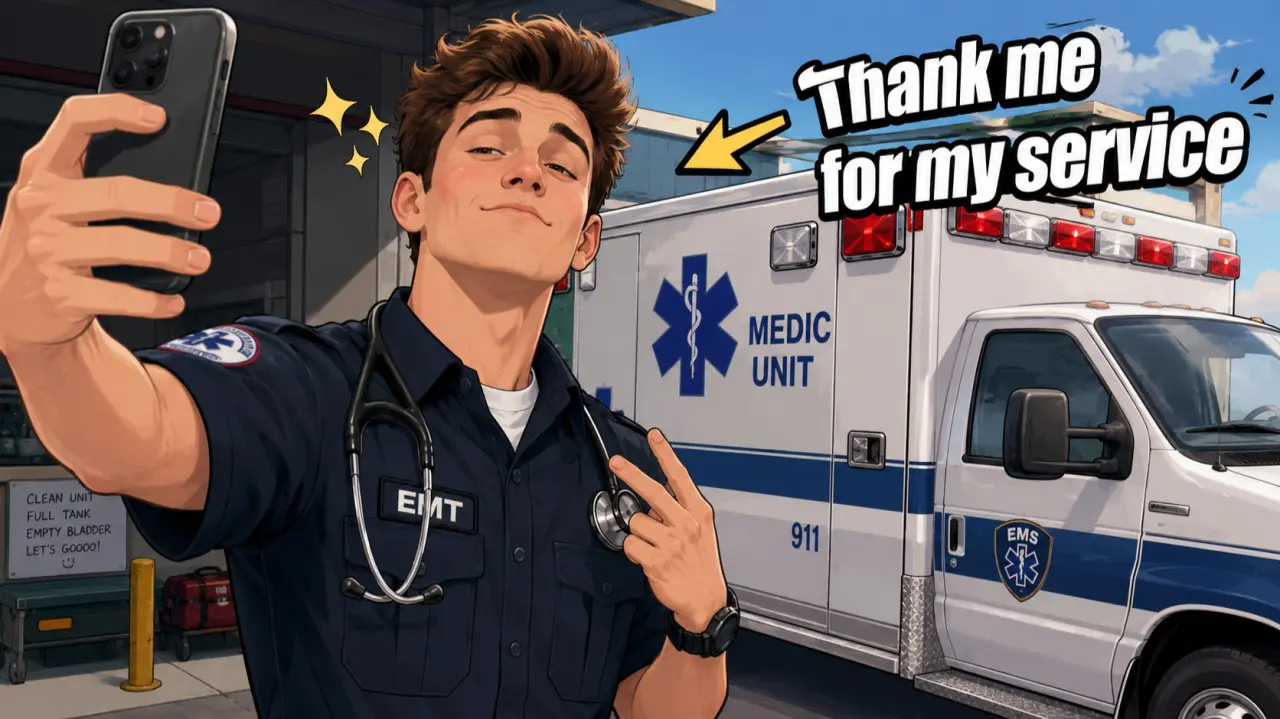
Not adrenaline. Not glory. Not “thank me for my service” Facebook posts.
Service.
Real service.
Sometimes ugly. Sometimes heartbreaking. Sometimes so absurd you’d laugh if you weren’t so tired.
Some folks discover real quick they liked the idea of EMS a whole lot more than the reality of hauling a stair chair up three flights while somebody’s uncle hollers directions that ain’t helping a soul.
But the ones who stay?
They get quieter.
Calmer.
Less interested in looking like a medic... and more interested in becoming one.
That’s when I know they might actually make it.