Ventilator Clinical Experience – Reflection / Observation
There is a hell of a difference between reading about ventilators in a book and standing at the bedside of a patient whose next breath depends on one.
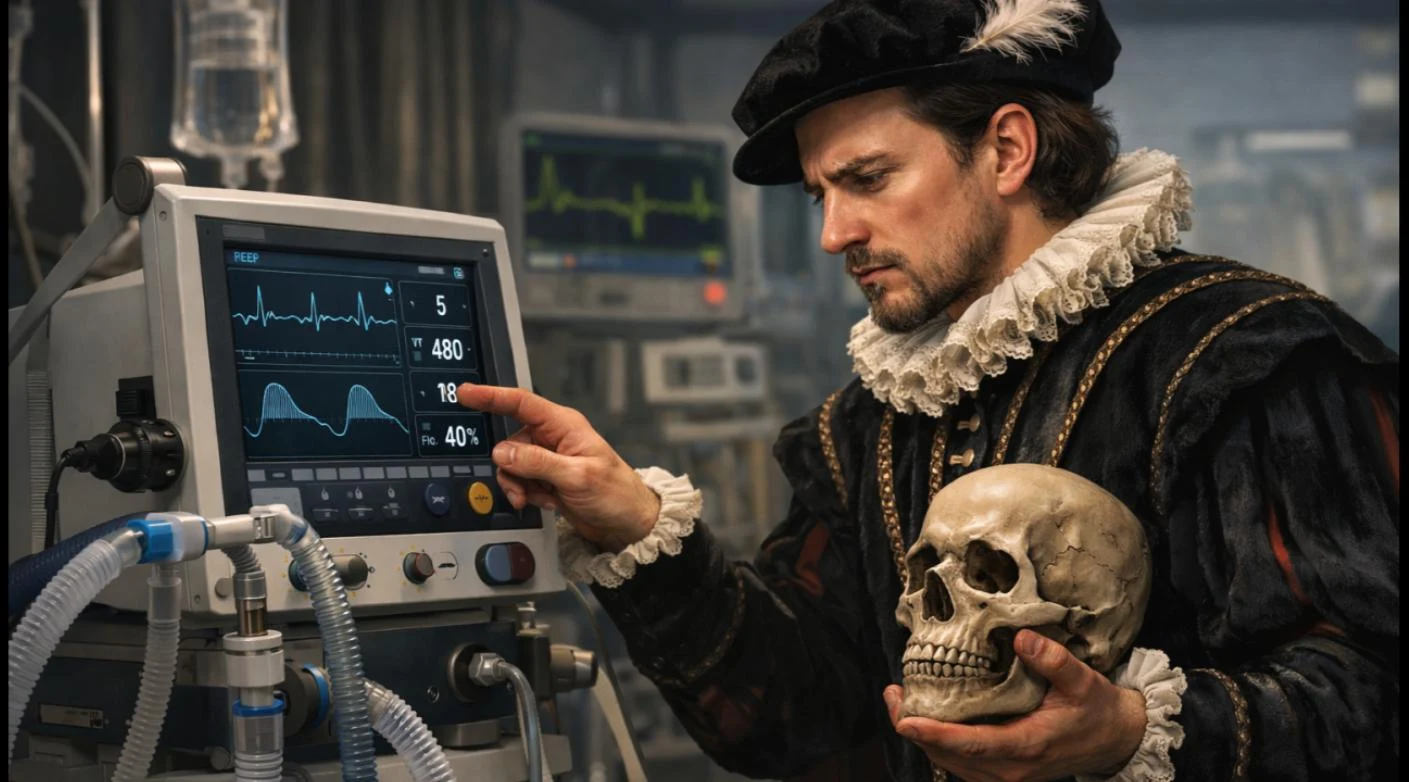
My ventilator clinical experience reinforced something I have believed for a long time in EMS and patient care: the machine matters, the settings matter, the alarms matter—but the patient matters first. Always. A ventilator is not just a box with lights, numbers, and noises. It is part of a delicate balancing act, and if you get hypnotized by the screen while forgetting the human being attached to it, you are already behind the power curve.
During this experience, I had the opportunity to shadow Megan, a respiratory therapist on Floor 2 at Select Specialty Hospital in Nashville, TN. She was attentive and compassionate with every patient we encountered. I never asked her how long she has been doing this work, but I honestly did not need to. It showed. You could see it in the way she walked into the room, the way she spoke to the patient, and the way she sized up the whole situation before acting like the vent alarm was the main character. She did not treat patients like room numbers, chores, or problems to be solved. She treated them like people first.
And that right there told me more than any résumé ever could.
Sure, she could read vent settings like a pro and troubleshoot alarms without even looking bothered. That part was obvious. But my biggest takeaway was not just that she knew her stuff. It was how she carried herself while doing it. She was calm. She was steady. She did not rush. She did not panic. She did not let the machine set the tone for the room. She embodied that old saying we love to throw around in EMS: slow is smooth, and smooth is fast. Only difference is, she was actually living it instead of just slapping it on a coffee mug or challenge coin.
That is where the lesson hit home for me.
Assessment, Not Panic
Ventilator patients are not the kind of patients you can half-step your way through and hope for the best. They demand attention. They demand respect. They demand that you slow your brain down enough to think before you start doing. When an alarm goes off, the answer is not to come unglued and start stabbing at buttons like a raccoon on an ATM. The answer is assessment. Look at the patient first. Check the airway. Check the tubing. Check the oxygen source. Check the settings. Check the patient’s presentation. Ask yourself whether the problem is mechanical, positional, clinical, or something as simple as secretions, anxiety, or a kink in the line.
What Megan demonstrated so well was that good clinicians do not just react—they assess. They do not just hear alarms—they interpret them. They do not just manage equipment—they care for patients.
That is a lesson worth dragging back into transport medicine and EMS with both hands. In our world, things can go sideways in a hurry, and it does not take much for people to get task-saturated, tunnel-visioned, or rattled. Ventilator patients do not leave much room for ego, sloppiness, or cowboy nonsense. If you are going to care for them, you need to know your equipment, know your fundamentals, and keep your head screwed on straight when the room starts making noise.
Ask Before Your Pride Cashes a Check
And for the new vent medics especially, let me say this plain enough to reach the people in the back: if you do not know something, ask the respiratory therapist. Ask before you guess. Ask before you fake it. Ask before your pride cashes a check your skill set cannot cover. From what I saw today, the RTs are more than willing to help. They know the equipment, they know the patients, and they are one hell of a resource—but you have to be willing to open your mouth and ask the question.
That is not weakness. That is not insecurity. That is professionalism. That is patient advocacy. That is how you keep a bad moment from turning into a bad outcome.
I also think it is important for the new vent medics to hear this from me directly: I am learning right alongside you. I may have been in EMS for 36 years, but this whole transport ventilator skill set is new to me too. So I am not writing this from some ivory tower with a halo and a laminated answer key. I am learning, watching, asking questions, and trying to get better just like the rest of you.
This clinical time also reminded me that preparation matters. Familiarity matters. Repetition matters. Nobody is asking transport clinicians to become respiratory therapists overnight, but there is a baseline level of competence and confidence that has to be there. You need to know where to find what you need, what the major settings mean, what the alarms are telling you, and when a patient is circling the drain even if the screen has not caught up yet. Because at the end of the day, the monitor is only part of the story. The patient is still the story.
Patient Advocacy in Its Rawest Form
Most of all, this experience reinforced that ventilator care is patient advocacy in one of its rawest forms. Many of these patients cannot tell you what is wrong. They cannot explain their discomfort. They cannot always speak for themselves. That means the clinician at the bedside has to be sharp enough to notice what is changing, skilled enough to respond, and compassionate enough to remember there is still a person in that bed and not just a collection of settings and waveforms.
I walked away from this experience with a deeper respect not only for ventilator management itself, but for the quiet professionalism it takes to do it well. Megan on Floor 2 made that clear without ever needing to make a speech about it. She showed me that real confidence in patient care does not look loud, rushed, or dramatic. It looks calm. It looks deliberate. It looks like somebody who sees the person before the problem and handles both with skill, compassion, and a level head.
That is what I will remember most.