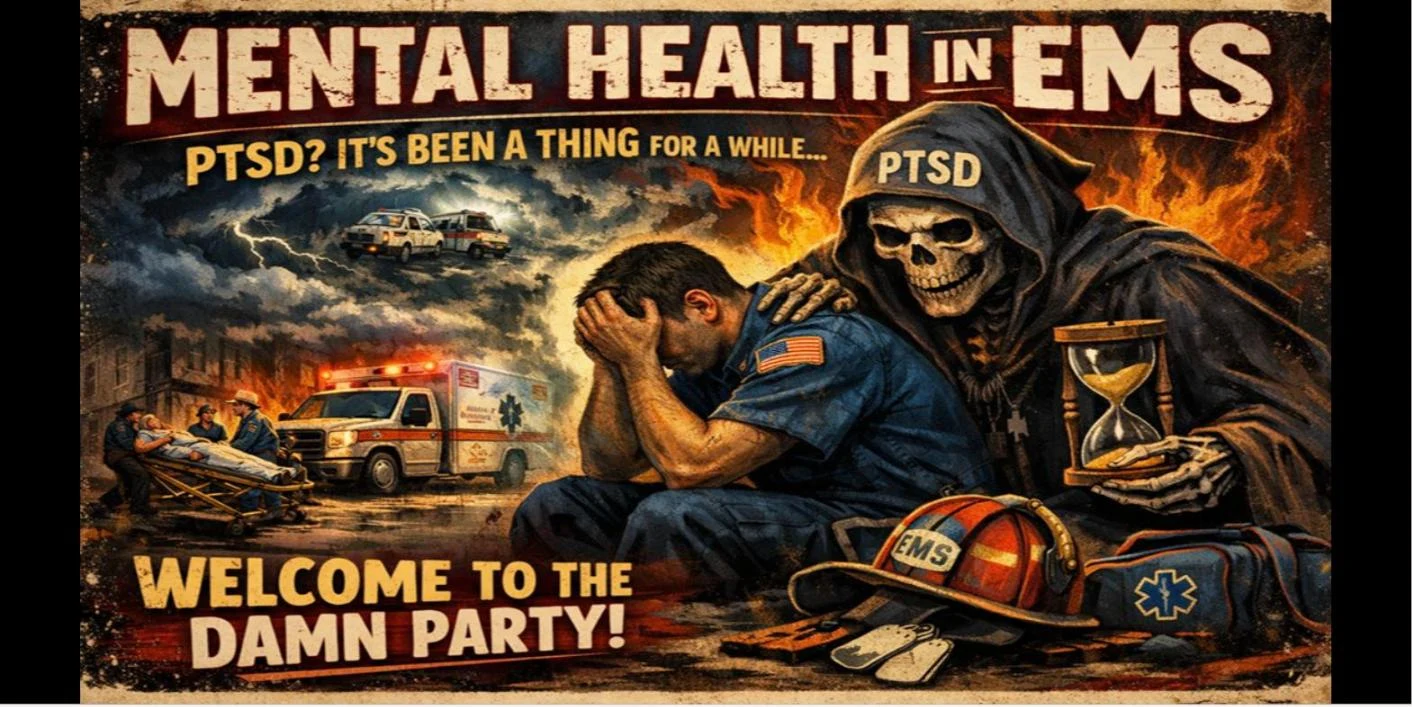
I’ve been out here for ten to fifteen years waving the “peer support / mental health” flag like some half-crazed guy on the overpass, and what’d I get? Crickets. Eye rolls. The ol’ “you good?” drive-by from the same folks who’d roast you alive if you admitted you weren’t.
And now? Now everybody’s on the PTSD train.
Chiefs. Supervisors. Admin types who couldn’t pick serotonin out of a lineup. Suddenly it’s “Check on your people” week and we’ve got a wellness poster taped to the fridge next to the expired creamer. Cool. Awesome. Love that for us.
Here’s why it happened, and it ain’t because EMS collectively found Jesus.
I watched services ignore this stuff until it started wrecking staffing, wrecking retention, and wrecking budgets.
Why It Actually Happened
People started quitting in numbers you can’t BS away. Not just “I’m transferring.” I mean done. Walking off the job, leaving healthcare, ghosting the whole career. When the schedule turns into a game of Jenga and nobody’s left to call in? Suddenly mental health becomes “a priority.”
COVID kicked the door in. It took the quiet misery and turned it into an airhorn. You couldn’t hide behind dark jokes anymore when half your crew looked like they’d been scraped off the pavement emotionally.
Liability started breathing down their necks. Agencies realized, “If we ignore this and someone suicides, crashes the truck, drinks themselves into a crater, or snaps on scene… we’re exposed.” And buddy, nothing motivates a system like the threat of court.
The new generation won’t eat the old garbage. Back in the day, we got force-fed “suck it up” like it was a vitamin. Newer folks? They’ll just leave. And honestly—good. The culture needed that slap.
Social media made it harder to bury. We used to suffer quietly and call it “being tough.” Now people talk out loud. Once it’s out loud, leadership can’t pretend it’s not happening without looking like monsters.
So yeah. It’s a bandwagon. Not always… but often. A lot of places didn’t jump in because they cared. They jumped because the building’s on fire and the insurance guy’s calling.
And When You Screamed It From the Rooftops?
I know that silence. I know it.
When you’re early with this stuff—when you’re honest—you threaten the whole fake “we’re fine” machine. You’re not “helpful,” you’re “dramatic.” You’re not “brave,” you’re “a problem.” Because if you admit trauma is real, you gotta admit the calls change people, the job breaks people, leadership decisions break people, and “professionalism” doesn’t magically fix a nervous system that’s been living on adrenaline and dead kids.
They weren’t ready to admit that. So they ignored you until ignoring you got expensive.
The Part That Makes Me Grind My Teeth
A lot of departments are doing mental health cosplay right now.
They’ll slap together a “peer team,” run a weekend class, hand out challenge coins, and act like they solved PTSD. Meanwhile the same folks are still mandating 24s back-to-back, denying vacation, and treating anyone who asks for help like they’re a liability.
That ain’t support. That’s decoration.
Peer support without real confidentiality is just snitch support. Peer support without training and oversight is just trauma hot-potato. Peer support without leadership backing is just a trap.
So What Do You Do With This Rage?
You use it like fuel. Because now—finally—they’re listening. Not for the right reasons, maybe, but they’re listening.
So I push hard on the non-negotiables:
- Confidentiality or I’m out. If peer support reports back to command staff, it’s not peer support. It’s intel gathering with hugs.
- Real training, real standards. Not “hey you’re nice, congrats.” I want structured training, ongoing education, and clinical backup so peers aren’t carrying everybody’s nightmares alone.
- Easy off-ramps to pro help. Peer support is triage, not definitive care. I want a clean handoff to therapists who actually get first responders, not “here’s an EAP number, good luck, don’t call during business hours.”
- Protect the peer supporters. The helpers get wrecked too. Secondary trauma is real, and nobody plans for it until the peer team starts falling apart.
And I’ll say the uncomfortable thing out loud, again, because it’s true: a lot of people only care about mental health once it’s attached to a staffing crisis.
Doesn’t mean you stop. It means you stop letting them turn your pain into a slogan.
My Scars, On the Table
Before somebody writes this off as “another salty medic rant,” I’ll put my scars on the table. I’m not yelling about this from some comfy, theoretical perch. I’ve had the SI. I’ve made attempts. I’ve woken up under those ER fluorescents after one didn’t take—dry mouth, EKG stickers stuck like bad decisions, somebody asking me the same damn questions while I’m trying to remember my own name. And yeah… I’ve done the all-expenses-paid week-long stay in the local psych facility—four times in four years—plus the outpatient grind afterward, the therapy that actually digs in and hurts before it helps. I didn’t “power through.” I crawled, got dragged, got patched up, and kept coming back until it started to stick.
I put it all down in my memoir, Emergency Exit: One Paramedic’s Journey to Hell and Back—because if one medic reads it and decides to reach for a hand instead of a ledge, then good. That’s the whole damn point.
—OGP
If you’re in that hole right now, call or text 988 in the U.S. (the Suicide & Crisis Lifeline), or reach your local emergency number. Don’t do the quiet-alone thing. It’s a liar.